About Nicaragua
Nicaragua
Nicaragua, located in the middle of Central America, was first discovered by Christopher Columbus in 1502 (during his fourth voyage to the Americas) – exploring the Atlantic (Caribbean) coast of that country. With Spanish conquistadors making they way into Nicaragua by the 1520s, they named the country after one of the indigenous Indian chiefs that they first encountered (Nicaragua). The towns of Granada and León were among the first Spanish settlements in the country.
With the Spanish Empire’s rule being challenged by independence movements in the early 19th century, Nicaragua became part of the First Mexican Empire in 1821. After the Mexican monarch was overthrown two years later, Nicaragua became part of the then-newly formed Federal Republic of Central America. Nicaragua eventually became independent in 1838. Interestingly, an American mercenary named William Walker, through questionable circumstances, made himself president of Nicaragua in 1856, because forces from neighboring Central American countries drove him out of power a year later.
During the early 20th century, the U.S. was throwing its military muscle in the Central American-Caribbean Basin. Due to potential interest in building a canal through Nicaragua, U.S. Marines occupied the country from 1912 to 1933. An armed insurgency led by rebel leader Augusto Sandino against both the local government and the U.S. Marines, which resulted in his eventual assassination in 1934.
Since then, Nicaragua endured periods of military rule – the longest being the Somoza dictatorship, which started in the late 1920s. Such rule ended in 1979, when then- dictator Anastasio Somoza and his National Guard( who ran the country) were driven out of power, as a result of a sustained guerrilla effort by a group called itself the FSLN (Sandinista National Liberation Front) – naming the movement after Augusto Sandino. The FSLN was a pro-Marxist group with alleged ties to Fidel Castro’s Cuba, and was set on creating a socialist government in that country.
With fervent anti-Communist Ronald Reagan won the U.S. Presidency in 1980, he eventually threw his support behind remnants of the now-deposed National Guard, who called themselves “Contras” (counter-revolutionaries) intent of kicked the Sandinistas out of power in Managua. With the Reagan administration authorizing the CIA to train and arm the “Contras” (mainly out of camps in neighboring Honduras). Fierce fighting between Sandinista forces (which eventually received aid from Cuba and Russia) and the U.S.-funded Contras eventually resulted in elections being held in 1990, which got the Sandinistas out of power, in favor of a political coalition led by opposition figure Violeta Chamorro. Interestingly, Sandinista leader Daniel Ortega, would win a presidential election in 2006, and has been president of the country ever since.
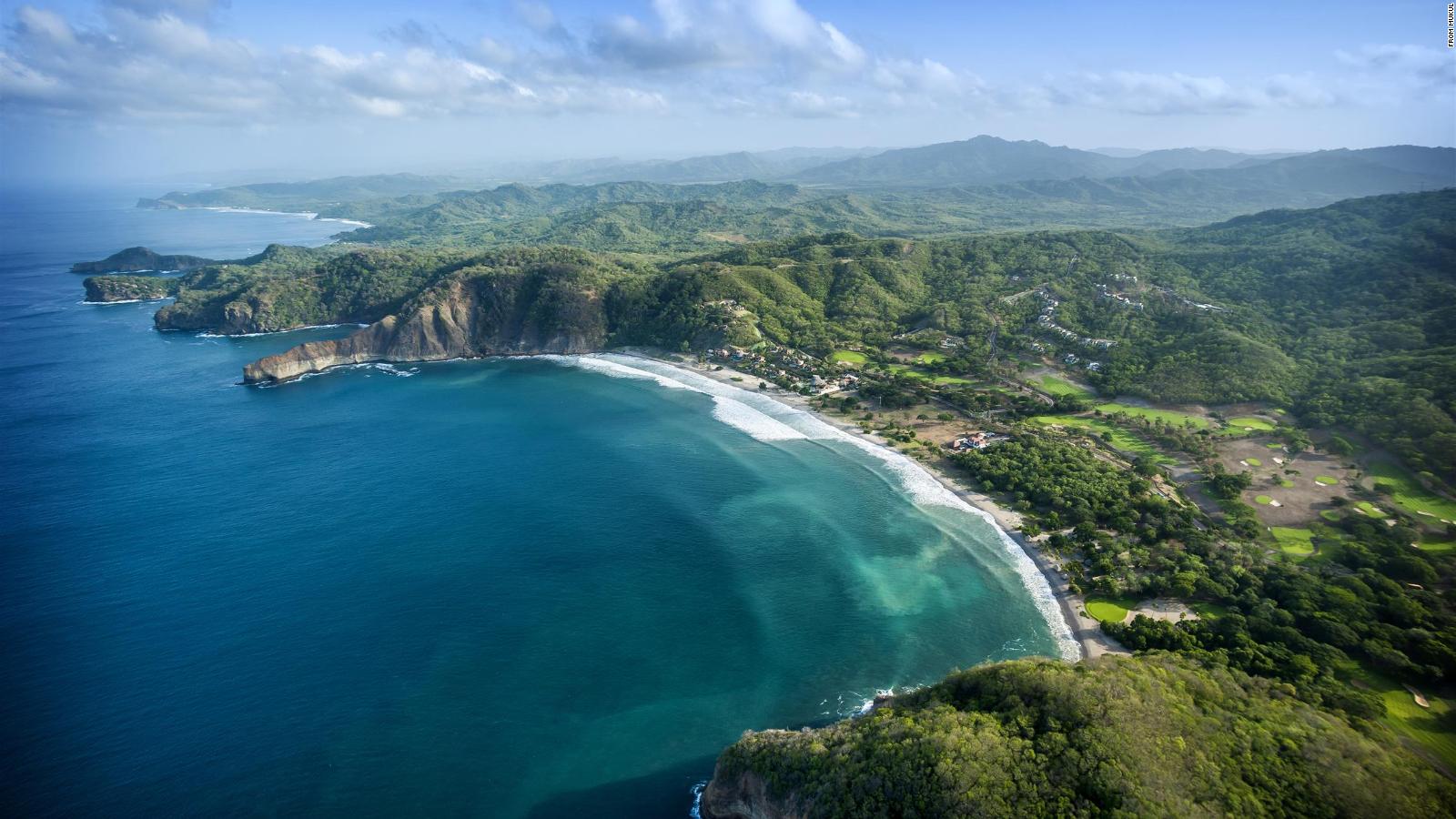
With Nicaragua making news headlines in the 1980s because of the Contra war, the country had grappled with its damaged image as a war-torn country. A new generation of U.S. and international travelers, which was not exposed to such negative press, has begun to venture into Nicaragua in recent years. As a result, a vibrant tourism industry is starting to take hold there. According to the World Bank, Nicaragua’s tourism earnings have grown from US$309 million (2010) to US$417 million in 2013.